Voice over IP does not need an exotic network, but it does need a stable one. A fast speed test alone cannot prove that calls will sound good. Voice is sensitive to delay, changing delay and packet loss, especially when several users share the connection with cloud applications, backups and video meetings.
Measure the conditions that affect a call
Bandwidth is the amount of traffic a connection can carry. Latency is the time traffic takes to travel. Jitter is variation in that travel time, and packet loss means portions of the conversation never arrive. A connection can have abundant bandwidth and still deliver poor calls because of congestion, wireless interference or unstable routing.
Test during the busiest parts of the day at every location. A quiet 7 a.m. test does not represent an office when cloud backups, video conferences and normal production work are active.
Review the local network
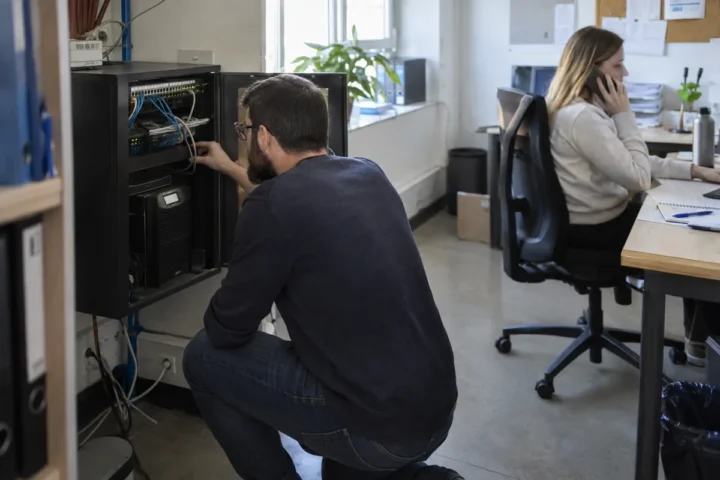
- Use business-grade switches with adequate capacity and current firmware.
- Confirm that cabling is properly terminated and damaged runs are repaired.
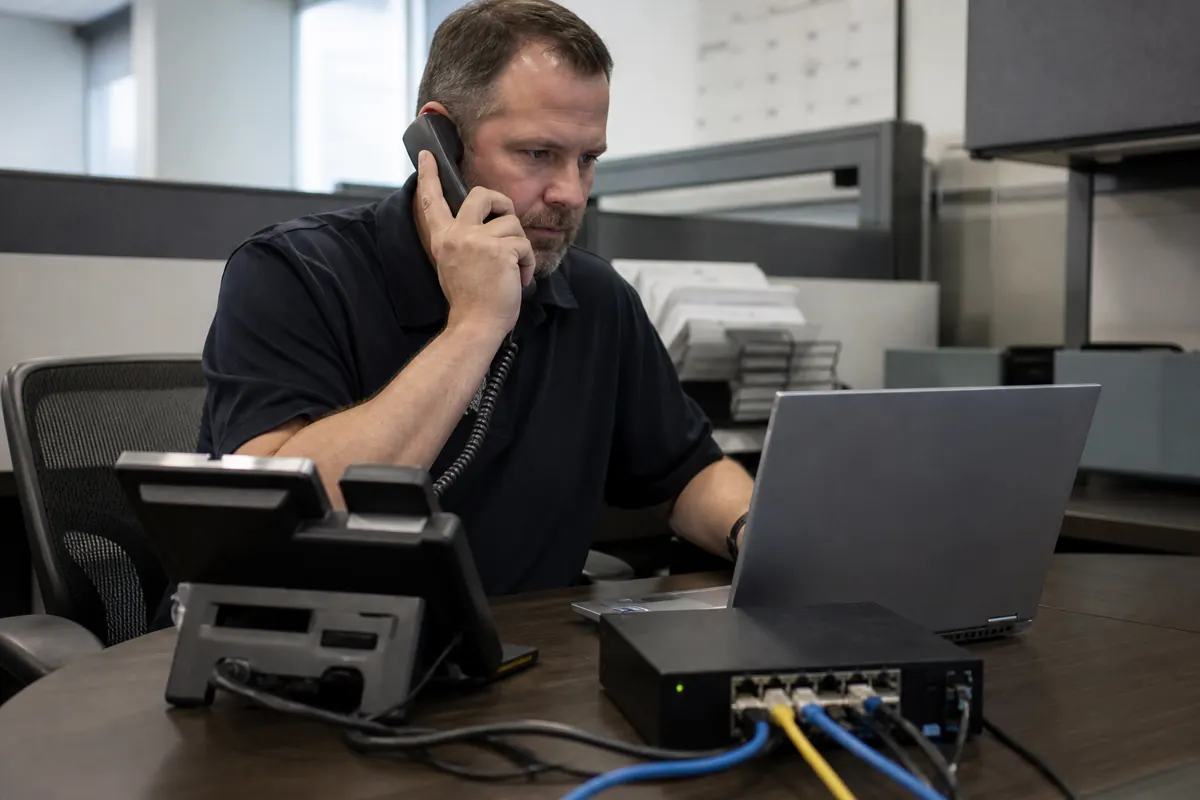
- Check power-over-Ethernet capacity if switches will power desk phones.
- Separate or prioritize voice traffic when the network design calls for it.
- Avoid relying on ordinary Wi-Fi for fixed reception and high-volume phone positions.
Plan for internet and power failures
Cloud platforms can route calls away from a failed office, but only if that routing is configured beforehand. Decide whether calls should move to mobile phones, another branch, an answering service or a recorded message. Critical offices may justify secondary internet service or cellular failover.
Desk phones, switches, routers and firewalls also stop when power fails. A properly sized UPS can keep short interruptions from becoming outages and provide time for an orderly shutdown during longer events.
Test before the port
Configure representative phones and soft clients with temporary numbers. Test inbound and outbound calls, transfers, queues, voicemail, mobile applications and remote users. Repeat tests during peak network use. Correcting a switch configuration is easier before the company’s main numbers move.
Network readiness should be part of every VoIP buying plan. When comparing business phone system quotes, ask exactly what the provider tests and who owns remediation.
Frequently asked questions
How much bandwidth does a VoIP call use?
Usage varies by codec and overhead. Providers should size the connection for expected simultaneous calls and other business traffic, not simply multiply a generic number by total employees.
Does quality of service fix a bad internet circuit?
No. Prioritization can manage local congestion, but it cannot repair packet loss or instability outside the network.
Can employees use VoIP over Wi-Fi?
Yes, but important fixed positions are often more predictable on wired connections. Remote Wi-Fi conditions should be tested individually.