A business phone migration succeeds when the team treats it as an operating change, not simply a hardware swap. Numbers, call flows, internet service, devices, user training and emergency calling all have to be ready at the same time.
Inventory the current environment
Start with every business number, extension, device and service. Include fax lines, alarms, elevators, postage meters, door systems and analog devices. Some of these should not move to a standard VoIP platform without a specific compatible solution.
Capture the current carrier account name, address, billing telephone number and recent invoice. Small discrepancies are a common reason number ports are rejected.
Document call flows in plain language
Write what should happen when a customer calls during business hours, after hours, during lunch, on holidays and when nobody answers. Include reception coverage, queues, overflow, voicemail, department transfers and emergency announcements. A clean diagram is more valuable than trying to duplicate years of undocumented settings.
Check the network before phones arrive
- Confirm internet bandwidth and performance at every location.
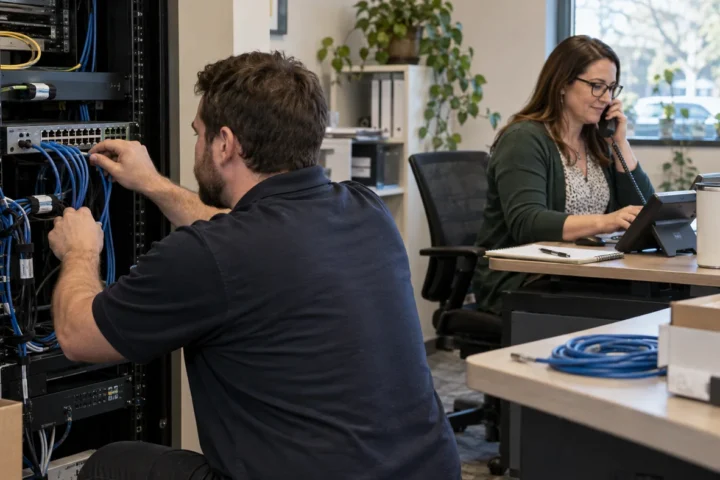
- Review switches, cabling, power-over-Ethernet capacity and VLAN design.
- Decide whether voice traffic needs quality-of-service policies.
- Plan power backup and internet-failure routing.
- Test remote and home-office conditions for critical users.
Control the number-porting schedule
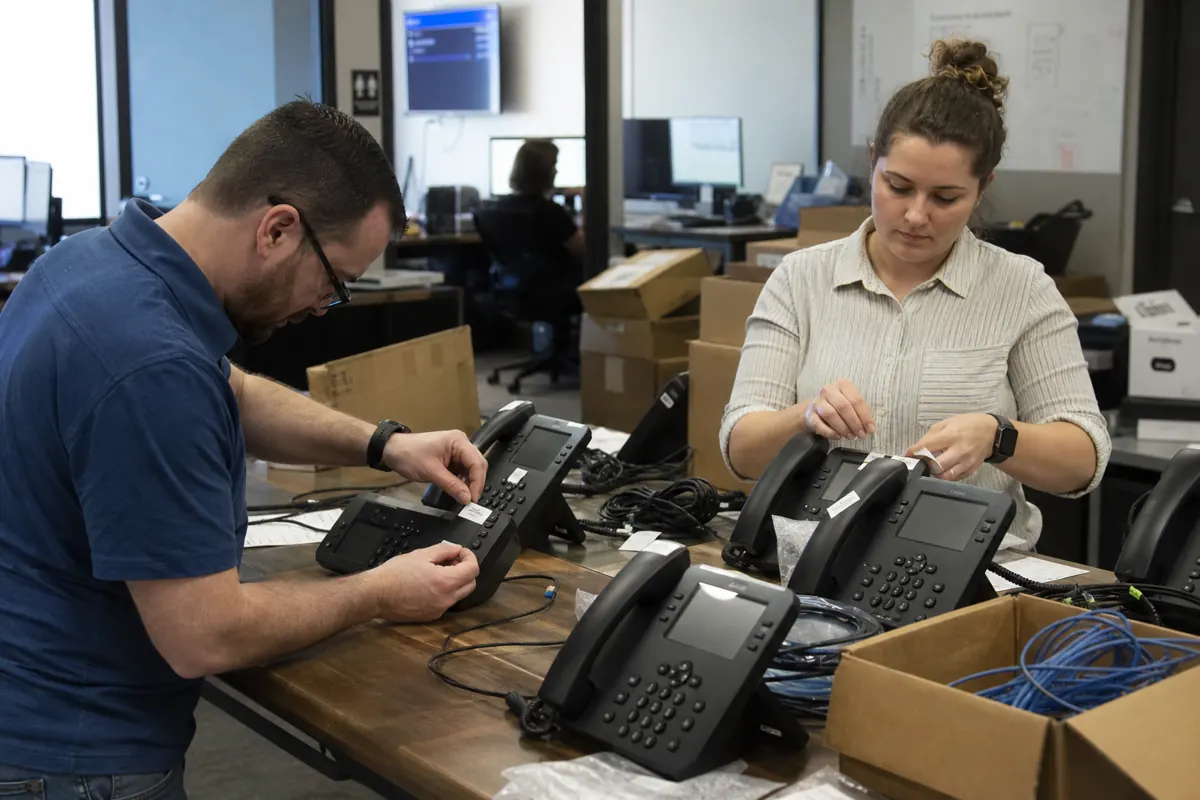
Do not cancel the existing carrier. Submit port requests only after the new system is configured and tested with temporary numbers. Confirm the exact numbers included, the expected port window, who monitors the cutover and what happens if one number does not move.
Train by role
Most employees need a short session covering calls, transfers, voicemail and mobile or desktop use. Receptionists, queue supervisors and administrators need deeper instruction. Provide a one-page quick reference and a clear help channel for launch week.
A provider should explain these responsibilities before the agreement is signed. Compare implementation support through the VoIP solutions overview, then request business phone system quotes based on the real migration scope.
Frequently asked questions
How long does a VoIP migration take?
A straightforward small office may take several weeks; multi-location projects and complex ports require more planning. Carrier lead times often control the schedule.
Should old phones be removed on cutover day?
Not until the new devices and inbound numbers are verified. A short controlled overlap is safer.
Who should own the project internally?
Choose one decision-maker who understands operations and can coordinate IT, reception, department managers and the provider.