Business VoIP pricing is usually presented as a monthly price per user, but that number is only the first line of the quote. Two proposals can advertise the same seat price and finish thousands of dollars apart once phones, implementation, taxes, support and calling usage are included.
The useful question is not simply, “What does VoIP cost?” It is, “What will this system cost for our actual users, locations and workflows during the first year?” That is the basis for a fair comparison.
What the per-user price normally includes
A standard cloud phone subscription commonly includes the calling platform, a business number, voicemail, basic auto-attendant functions, mobile and desktop applications, and routine software updates. The exact bundle varies. Some entry plans omit call recording, advanced queues, analytics, CRM integrations or supervisor tools that another provider includes.
Count real users carefully. A reception phone, conference room, warehouse station, fax adapter and common-area phone may be licensed differently from a named employee. Ask each provider to show which devices and functions require a full seat.
The costs that change a VoIP quote
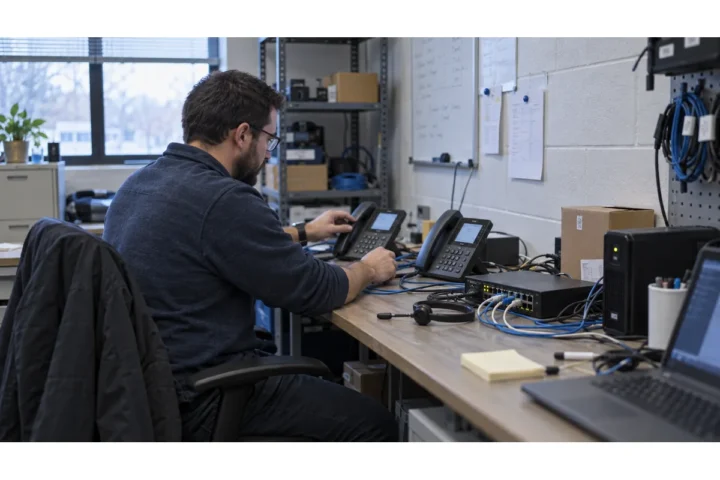
- Desk phones and accessories: buying phones upfront produces a different first-year cost than renting hardware.
- Implementation: number porting, call-flow design, device configuration, training and onsite work may be included or itemized.
- Features: contact-center queues, recording, transcription, analytics and integrations often require higher tiers.
- Calling: confirm domestic allowances, toll-free usage, international rates and any metered services.
- Taxes and regulatory fees: these may not appear in an advertised seat price.
- Connectivity: an office may need better internet service, a managed switch, power protection or network remediation.
Build a first-year cost comparison
Put every proposal into the same worksheet. Separate recurring subscription charges from one-time implementation and equipment costs. Then add optional items the business realistically expects to use. A three-year contract deserves a three-year view as well, including annual increases and device replacement terms.
| Cost area | Question to ask |
|---|---|
| Licenses | Which people, rooms and devices need paid seats? |
| Hardware | Are phones purchased, financed, rented or included? |
| Setup | Who builds call flows, ports numbers and trains users? |
| Support | What help is included after launch and during outages? |
| Contract | What increases, renewal terms and cancellation charges apply? |
Clear Call Connect’s VoIP buyer’s guide provides additional planning context. When you are ready to compare the same scope across providers, request business phone system prices using a realistic user and location count.
Frequently asked questions
Is the lowest per-user price usually the cheapest option?
No. A low seat price can become expensive when required features, phones, setup and support are added separately.
Should every employee receive a license?
Not automatically. Base the design on job roles, devices and calling needs rather than payroll headcount alone.
What information improves a VoIP quote?
Provide user and location counts, existing numbers, phone preferences, call flows, integrations, internet connections and the target launch date.